Dev, Test and Prod in one AWS organization
Dev, Test and Prod live in separate accounts under IAM Identity Center. Service control policies set the guardrails, and each environment has its own roles.
- 65% fewer access requests
I'm Yash, building LLM infrastructure, evaluation systems and cloud platforms in Arizona.
rednote-gate checked against the live site on
Dev, Test and Prod live in separate accounts under IAM Identity Center. Service control policies set the guardrails, and each environment has its own roles.
Hybrid search over 43,000+ scholarship records now runs on pgvector, where a 3 GB MindsDB sidecar used to sit.
A serverless pipeline, orchestrated with AWS Step Functions, compresses models and deploys them. It runs 100+ times a month.
LLM-as-judge with calibrated scoring, multi-turn A/B evaluation and a reranker calibration harness make output quality reproducible. One study chose Haiku over Sonnet on measured quality and cost.
Figures and quotes are from each project's README, as it read on 2026-10-08.
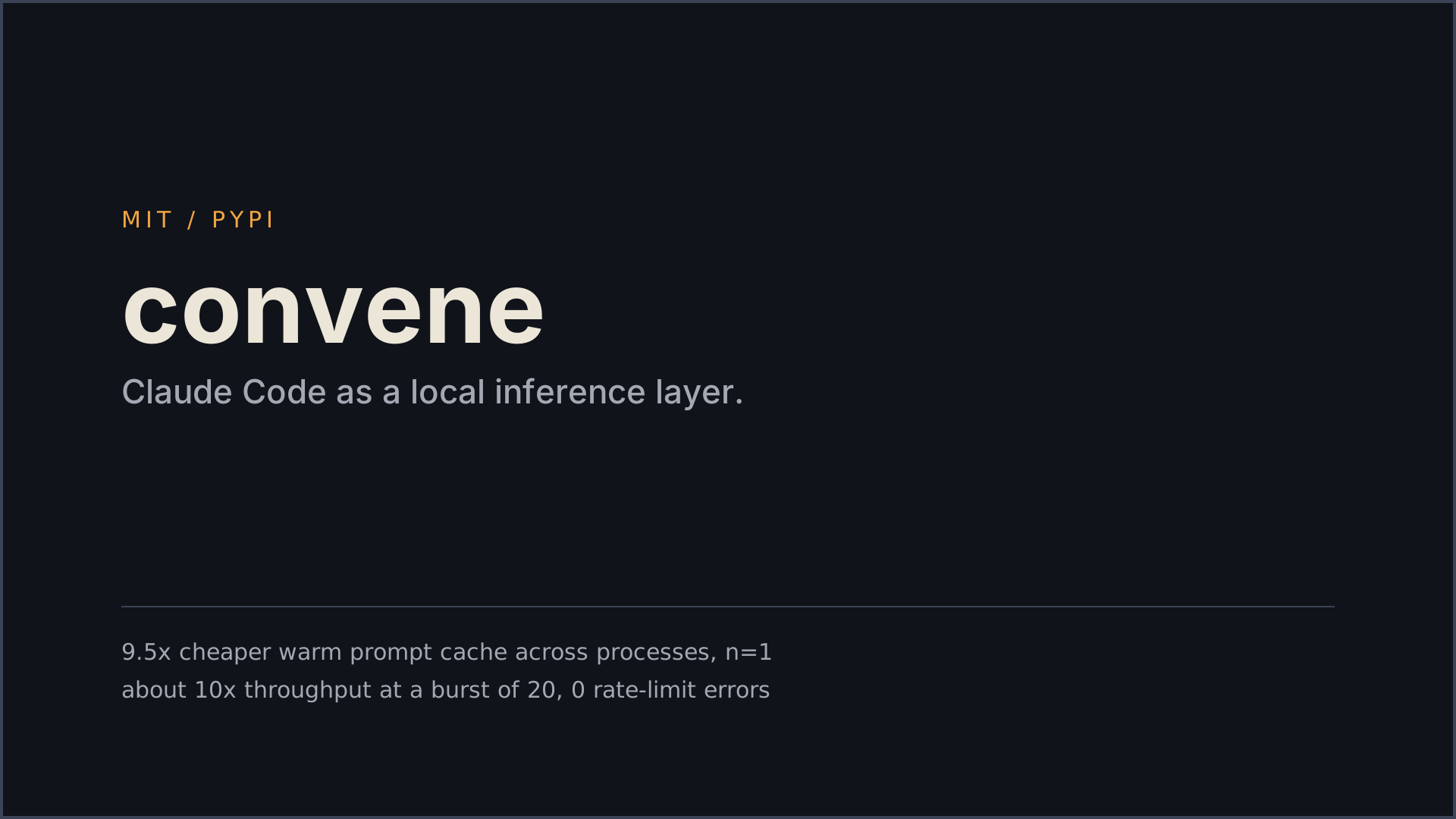
Local inference layer for Python on top of a logged-in Claude Code.
9.5x cheaper warm: $0.00281 against $0.02670.
~10x throughput, 0 rate-limit errors at a burst of 20.
Python 3.11+, zero dependencies
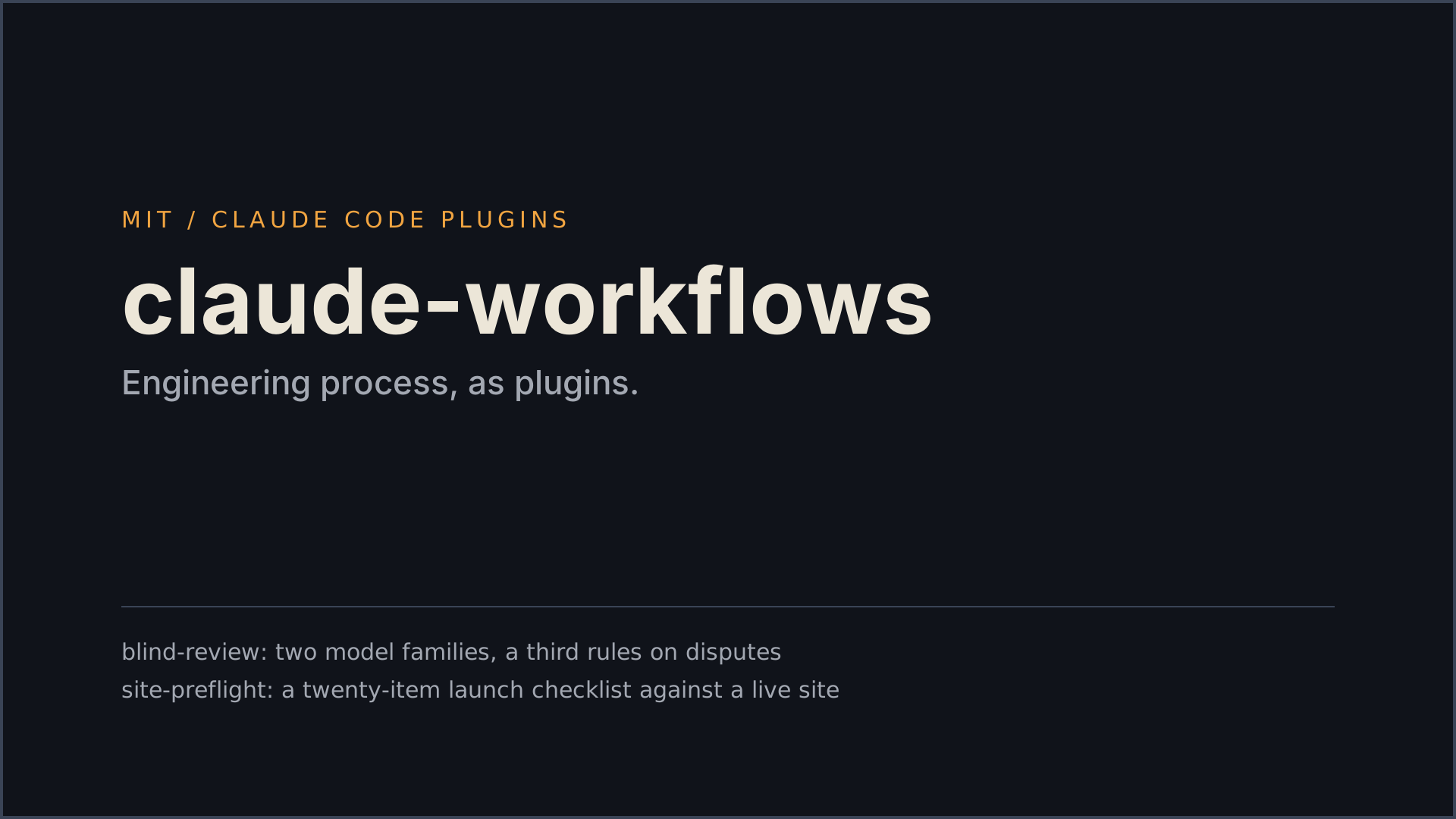
Two Claude Code plugins: blind-review, where two model families review a PR blind and a third rules where they disagree, and site-preflight, a twenty-item launch checklist run against a live site.
blind-review: two reviewers from different model families read a PR's diff and brief and nothing else, in parallel, with byte-identical prompts.
Where they disagree, a third model family adjudicates.
Claude Code plugins, Node 22 or newer
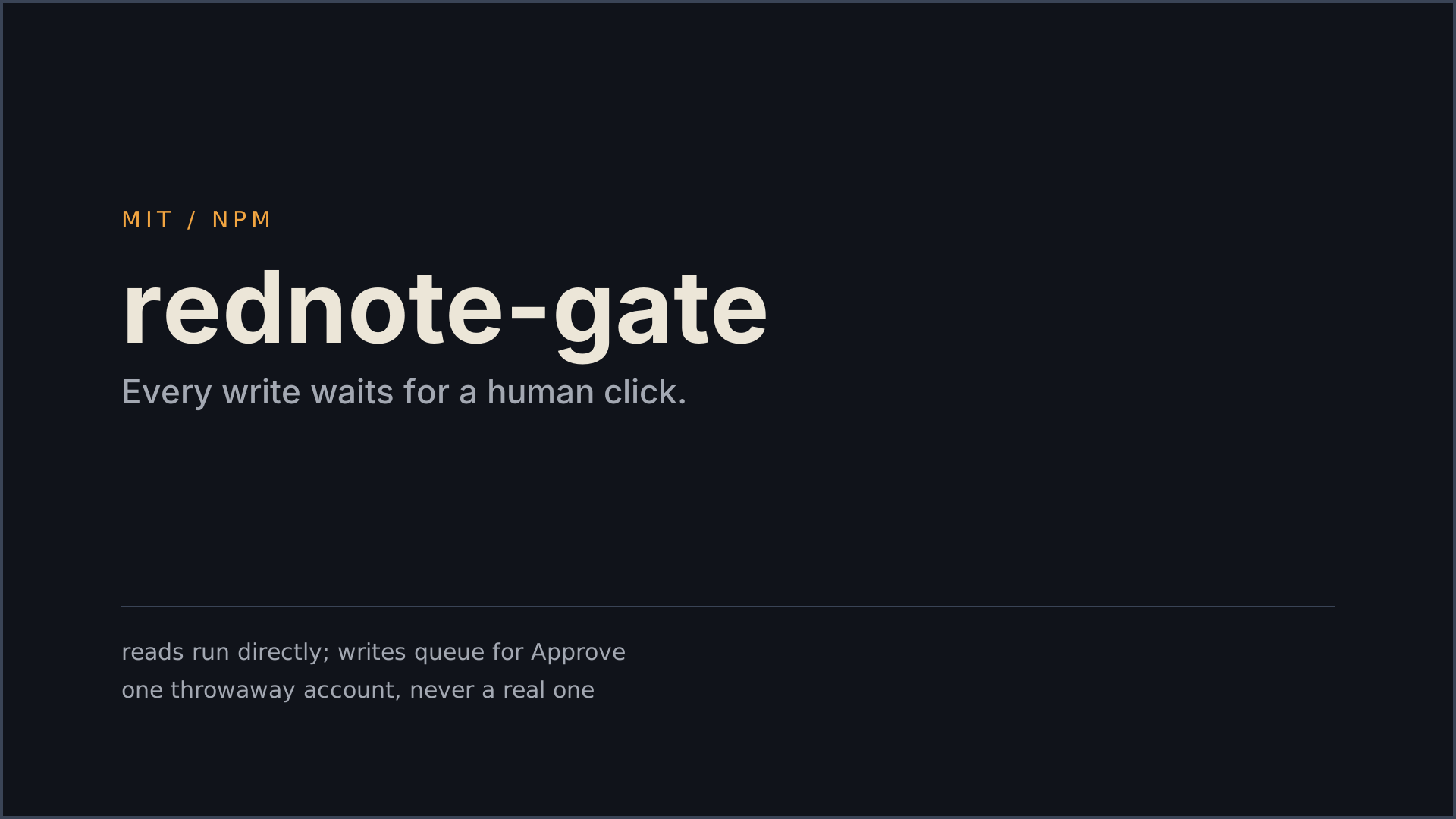
MCP server for one throwaway RedNote account.
5 read tools run straight away. 6 write tools only queue. 4 local tools never touch RedNote.
Every write waits in a queue until a human clicks Approve on a local web page.
TypeScript, Playwright, Node 20 or newer
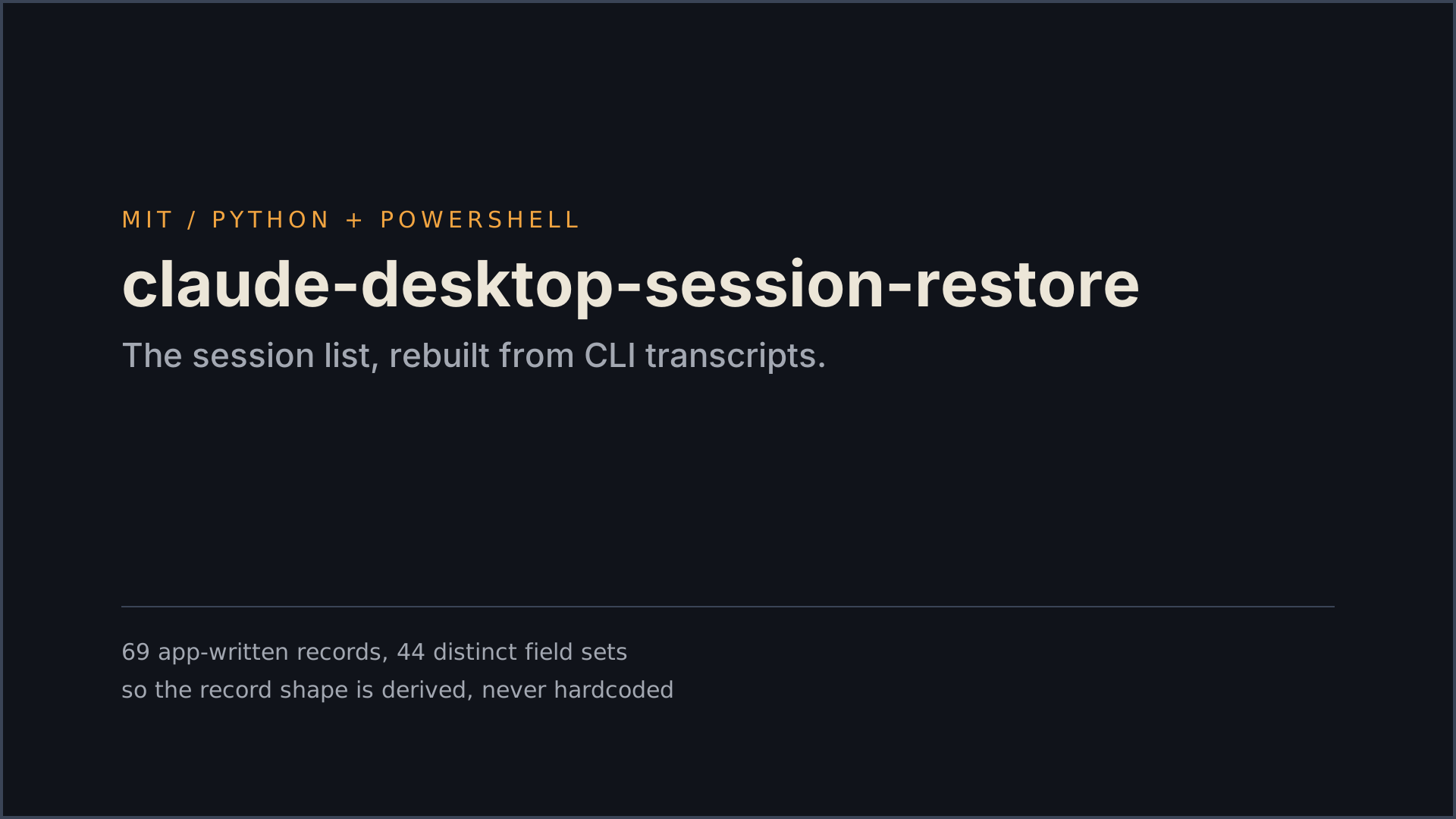
Rebuilds the Claude Desktop session list from CLI transcripts.
The 69 macOS records carry 44 distinct fields in 44 distinct field-set signatures, from 19 to 33 fields per record.
Python 3.9+, PowerShell 5.1+, no dependencies
Friday answers from my résumé and nothing else, and the section behind each answer opens under it.
| When | What |
|---|---|
| Sep 2025 to present | Software Development Engineer Walnutech PBC Converted to full-time April 2026.
|
| Jan 2026 to Mar 2026 | Software Developer United Portraits
|
| Jan 2024 to Aug 2025 | Cloud & ML Researcher VISA Research Lab
|
| Aug 2025 | MS Computer Science Arizona State University |
| Dec 2022 | BS Computer Science Arizona State University Summa Cum Laude |